Expertise article
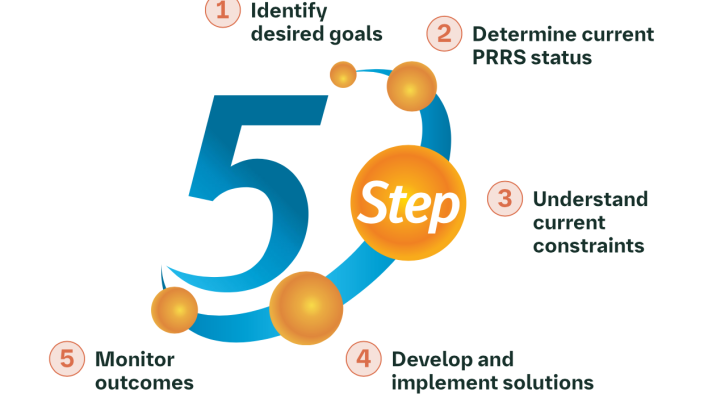
Monitor outcomes
Monitor outcomes to ensure long-term PRRS control success. Track diagnostic results and pig performance data across sow, grow-finish, and whole production systems to detect low-level virus circulation, guide decisions, and move herds toward stable or negative status.

Guilty Guilt Guide
The Guilty Gilt Guide was written with a clear objective – to maximize the whole-herd performance of pig populations by helping gilts to reach their full reproductive potential and produce healthy pigs that reach their full genetic potential during grow-finish.

Implementing a user-friendly format to analyze PRRSV next-generation sequencing results and associating breeding herd production performance with number of PRRSV strains and recombination events
- Expertise article
- Giovani Trevisan, Michael Zeller, Ganwu Li, Jianqiang Zhang, Phillip Gauger, Daniel C.L. Linhares
The open reading frames (ORF)5 represents approximately 4% of the porcine repro- ductive and respiratory syndrome virus (PRRSV)-2 genome (whole-PRRSV) and is often determined by the Sanger technique, which rarely detects >1 PRRSV strain if present in the sample.

Refining PRRSV-2 genetic classification based on global ORF5 sequences and investigation of their geographic distributions and temporal changes
- Expertise article
- Yim-im et al., 2023
Porcine reproductive and respiratory syndrome virus (PRRSV) is an important swine pathogen affecting the global swine industry.
Effect of multiple vaccinations on transmission and degree of Mycoplasma hyopneumoniae infection in gilts
- Expertise article
- Betlach et al.
Mycoplasma hyopneumoniae (M. hyopneumoniae) infections continue to result in significant respiratory challenges in the swine industry worldwide. Vaccination for M. hyopneumoniae is commonly utilized, as reduction in bacterial loads and clinical severity in vaccinated pigs have been shown. However, the effect of M. hyopneumoniae vaccination on transmission across different pig populations has been minimally investigated.
The effect of gilt flow management during acclimation on Mycoplasma hyopneumoniae detection
- Expertise article
- Takeuti et al.
The objective of this study was to characterize the Mycoplasma hyopneumoniae (M. hyopneumoniae) detection and seroconversion patterns in recently acclimated gilts to be introduced to endemically infected farms using different types of replacement management. Three gilt developing units (GDUs) belonging to sow farms were included in this investigation: two farms managed gilts in continuous flow, and one farm managed gilts all-in/all-out.

The concept of Single and Double 12
Gilts should be in a biosecure facility (i.e., quarantine), avoiding unexpected infections before introduction to sow farms, to avoid the disease outbreaks in sows and offspring. Relying solely on natural immunization does not result in even (homogeneous) and consistent immunity. If the gilts are housed in a continuous flow system before entering the sow herd, they can carry PRRS virus from recently placed animals to the sow breeding unit.