The 12th European PRRS Research Awards
Discover the winners

COMBAT - Updated biosecurity tool with 4 features
Read now
The Guilty Gilt Guide
Read now
PRRS Ctrl 2.0
Download for free The 12th European PRRS Research Awards
 COMBAT - Updated biosecurity tool with 4 features
 The Guilty Gilt Guide
 PRRS Ctrl 2.0
April 2026
02
03
04
05
06
07
08
09
10
11
12
13
14
15
16
17
18
19
20
21
22
23
24
25
26
27
28
29
30
May 2026
01
02
03
04
05
06
07
08
09
10
11
12
13
14
15
16
17
18
19
20
21
22
23
24
25
26
27
28
29
30
31
June 2026
01
02

Effect of Porcine circovirus 2 (PCV-2) maternally derived antibodies on performance and PCV-2 viremia in vaccinated piglets under field conditions
- Expertise article
- Figueras-Gourgues et al.
Nowadays, the most common presentation of PCV-2 is the subclinical infection in piglets after weaning. The success of PCV-2 vaccination is associated with the control of the clinical disease as well as the improvement of production parameters.
Financial Analysis of Herd Status and Vaccination Practices for Porcine Reproductive and Respiratory Syndrome...
- Top publications | January
- Julia Adriana Calderón Díaz, Rose Mary Fitzgerald, Laurence Shalloo...
Porcine reproductive and respiratory syndrome virus (PRRSv), swine influenza virus (SIV) and Mycoplasma hyopneumoniae (MHYO) are among the most common agents involved in the porcine respiratory disease complex. They are also among the most significant infectious conditions contributing to substantial losses in the pig industry. Financial losses are mainly attributed to increased mortality rates, increased feed costs, reduced growth performance and increased costs for vaccination and disease control.

What is the difference between gilt development and gilt acclimation?
- 1 minute
- Bite size
- Clayton Johnson
Meet the Expert Bite Sizes with Clayton Johnson.

European PRRSpective 2023 - Breakout round
- 49 minutes
- European PRRSpective | Expertise video
European PRRSpective 2023 session 1 Improving health in endemic infected Sow farm
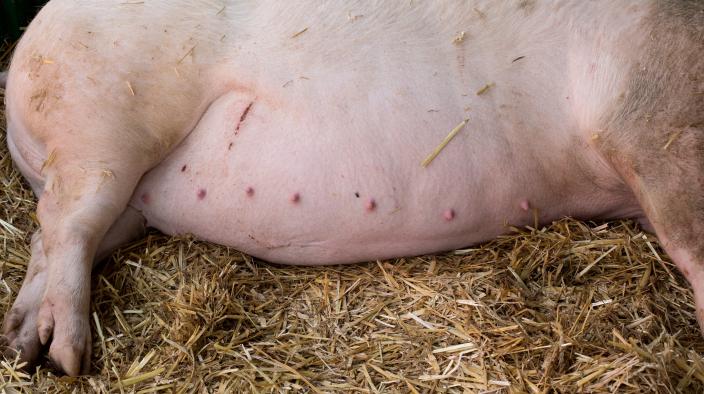
Effects of three commercial vaccines against porcine parvovirus 1 in pregnant gilts
Porcine parvovirosis is a common and important cause of reproductive failure in naïve dams. Even though vaccination is generally effective at preventing disease occurrence, the homology between the vaccine and challenge strains has been recently suggested to play a role in protection.

Episode 3 - APP: Profile of a rapid killer
- 17 minutes
- Podcast in Episodes
- Prof. Greg Stevenson
“It’s like an invading army in the lung, pigs can die from it within a day of infection”


To Eliminate PRRS in an area, how important is air born transmission?
- 1 minute
- Bite size
- Kristian Havn
Meet the Expert Bite Sizes with Kristian Havn.